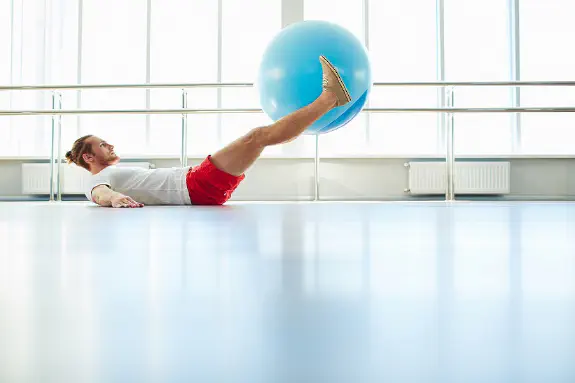
An exercise ball, also called a yoga ball, Swiss ball or stability ball, is one of the most versatile pieces of home fitness equipment you can own. It is affordable, easy to store and useful for core work, balance, stretching and even as an occasional alternative to a desk chair. Here is how to choose the right one and start using it safely.
Choosing the Right Size
Size matters more than most people expect. A ball that is too small or too big makes exercises awkward and less stable.
- Follow the size chart. Most manufacturers give a recommended ball diameter for your height.
- Do the sitting test. When you sit on the ball with your feet flat on the floor, your hips should be level with or slightly higher than your knees.
- Check the quality. Look for a ball described as anti burst or burst resistant and check the maximum weight it is designed for.
You can compare sizes in our yoga ball range, for example this thickened stability ball.
Inflating and Looking After Your Ball
Many balls are delivered flat. Inflate yours to the diameter given by the manufacturer, using a measuring tape or the guide on the packaging. A new ball often needs topping up after a day or two as the material settles.
A firmer ball is more challenging for balance, while a slightly softer ball feels more stable. Keep it away from sharp objects, radiators and direct sunlight, and check it regularly for damage.
Six Beginner Exercises
Start on a non slip surface with some space around you. Perform each exercise slowly and with control, aiming for 8 to 12 repetitions or a short hold.
- Seated balance. Sit tall on the ball with your feet hip width apart. Gently lift one foot a few centimetres off the floor, hold, then switch. This wakes up the deep core muscles.
- Pelvic tilts and circles. Sitting on the ball, slowly roll your hips forwards and backwards, then in small circles. A great mobility exercise for the lower back and hips.
- Glute bridge. Lie on your back with your heels on top of the ball. Squeeze your glutes and lift your hips until your body forms a straight line, then lower slowly.
- Wall squat. Place the ball between your lower back and a wall. Slowly squat down as far as is comfortable, letting the ball roll with you, then stand back up.
- Stability plank. Rest your forearms on the ball and your toes on the floor, keeping your body in a straight line. Start with 10 to 20 seconds.
- Back extension. Lie face down with your stomach on the ball and your feet against a wall. Gently lift your chest, keeping your neck in line with your spine, then lower.
Safety Tips
- Start with exercises close to the floor and progress gradually.
- Keep the area clear of furniture with sharp corners.
- Wear trainers or train barefoot on a non slip mat, not in socks.
- Stop if anything feels painful, and do not hold your breath during exercises.
If you are recovering from an injury, have back problems or are pregnant, check with your doctor or physiotherapist before using an exercise ball. A qualified personal trainer can also show you correct technique and build a programme around your goals.
Using the Ball as a Chair
Some people like to sit on an exercise ball for part of the working day, as it encourages small movements and a more upright posture. If you try this, start with short periods and alternate with a normal chair, as sitting on a ball for hours can be tiring. Make sure your desk height still works for you.
Used regularly, an exercise ball is a simple and fun way to add variety to your home workouts and keep your core strong.